
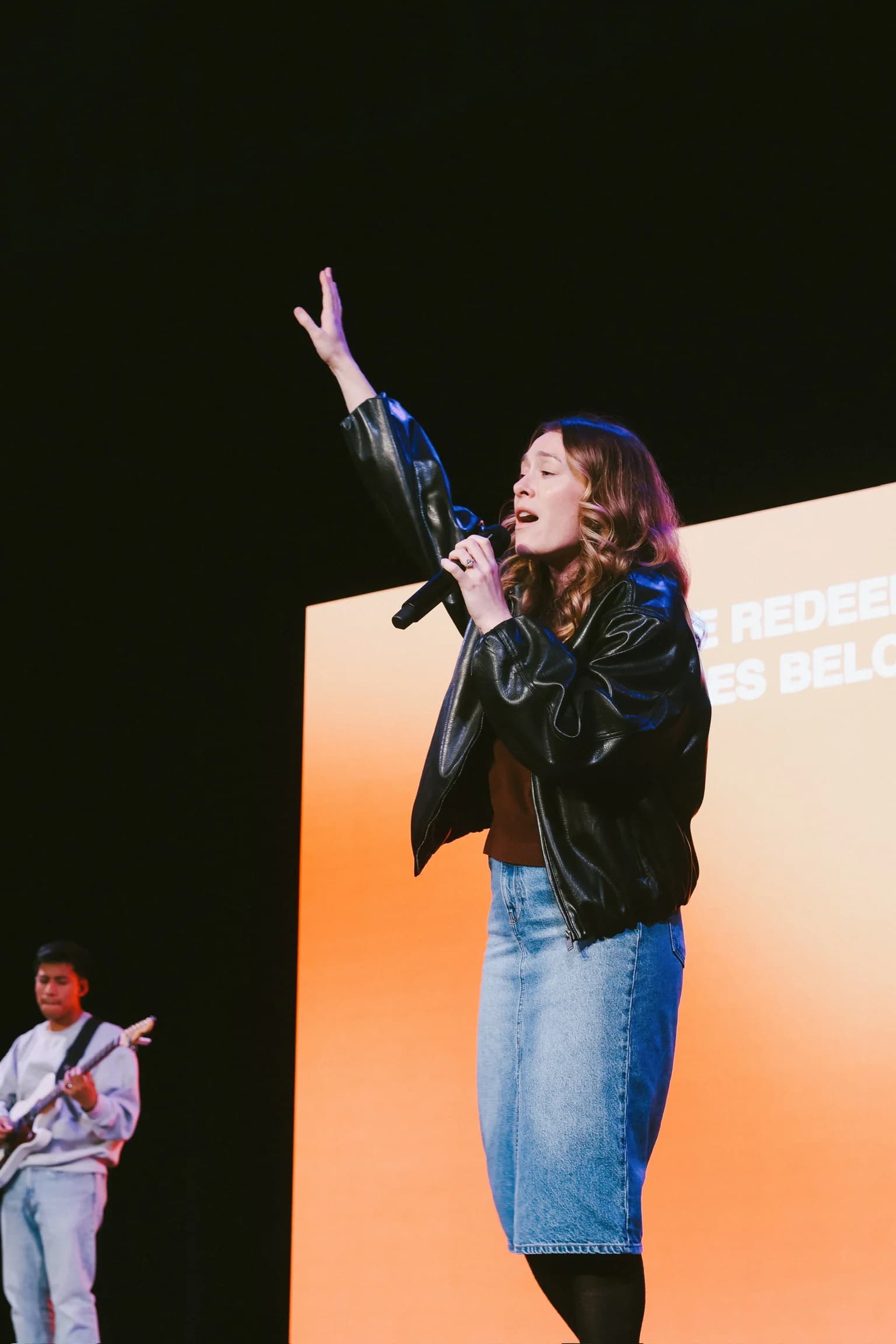
A church LED wall can change how a worship space looks and functions. It can make lyrics easier to read, improve visual clarity, support sermon graphics, strengthen livestream production, and give the room a cleaner visual surface.
But when a church treats an LED wall like a large television, it can inherit avoidable problems: poor image quality, camera flicker, awkward sizing, bad viewing angles, difficult service access, or a system that looks impressive but is hard to operate every Sunday.
The screen is one part of the system. The room determines whether that system succeeds.
How a church LED wall installation comes together
- Review the room. Establish content, viewing distances, camera use, existing equipment, and the people operating it.
- Design and coordinate. Agree on the display layout, processing, support, power, and cable routes with the relevant trades.
- Confirm site readiness. Check access, building work, electrical provision, and delivery timing before the installation crew arrives.
- Install the system. Build the agreed support and display assembly, then connect the signal and control paths.
- Calibrate and test. Check image consistency, content, camera performance, and each required output.
- Hand over to the team. Walk through startup, shutdown, source selection, basic troubleshooting, and how to request support.
The church can help by naming a decision-maker, providing drawings and room access, coordinating local trades, and scheduling operators for training. The project proposal should identify who is responsible for each task.
The shift
Why churches are moving from projection to LED
Projectors have served churches well for years, but many sanctuaries are outgrowing them. In rooms with stage lighting, windows, bright house lights, or long viewing distances, projection can struggle with brightness and contrast. Text can look washed out, sermon slides lose clarity, and camera shots expose the screen poorly.
LED walls produce their own light. A properly designed wall can provide strong brightness, deep contrast, consistent color, and better visibility across the room.
- Clearer worship lyrics and sermon visuals
- Improved visibility from more seats
- Cleaner camera shots
- Less dependence on lamps and screen alignment
- A flexible visual backdrop for worship and events
The goal is not simply to make the stage look impressive. The goal is to help people engage without visual distractions.
The complete system
What is included in a church LED wall installation?
A good installation includes more than panels. Depending on the room, the project may involve:
The wall may also need to integrate with cameras, livestream equipment, lighting control, worship presentation software, and the main video switcher. That is why it helps to work with a church AVL integrator before buying panels and solving everything else later.
Viewing distance
Pixel pitch matters more than most churches realize
Pixel pitch is the distance between pixels on an LED panel. A smaller pitch puts pixels closer together and usually creates a sharper image at closer viewing distances.
This matters because church audiences are often closer to the screen than people realize. If the first rows are near the stage, a wider pixel pitch can make text and detailed graphics look rough up close. If the room is deeper, a wider pitch may be appropriate and more budget-conscious.
The right choice depends on the nearest seat, room depth, wall size, displayed content, camera use, budget, and long-term visual expectations. The wrong pixel pitch is an expensive mistake because software cannot fix it after installation. Qohr resolves pitch against the real room as part of church LED wall design and installation.
Broadcast
Make sure the wall works on camera
Some LED walls look fine in person but create flicker, scan lines, color inconsistency, moiré patterns, or exposure problems on video. These issues become visible when cameras frame the stage during worship or teaching.
The panel and processing need camera-conscious performance, not only a bright specification.
Shutter settings, distance, lens choice, brightness, and viewing angle all affect the image.
Consistent color and controlled brightness matter in the room and in broadcast.
Patterns, detail, motion, and contrast can either help or fight the camera.
This is one reason churches should not shop by panel price alone. A lower-cost wall can become expensive if it causes recurring livestream problems. Qohr LED supplies the panels and installs the complete system, so one team owns the result.
Stage relationship
Think through screen size and stage design
Bigger is not automatically better. A wall that is too small may not solve visibility. One that is too large can overpower the stage, create awkward sightlines, or make the platform feel cramped.
Consider the back row, lyric readability, available stage width, camera framing, the position of worship leaders, the type of content, and whether the church needs one central wall or multiple displays. The LED wall should support worship and communication. It should not fight the room.
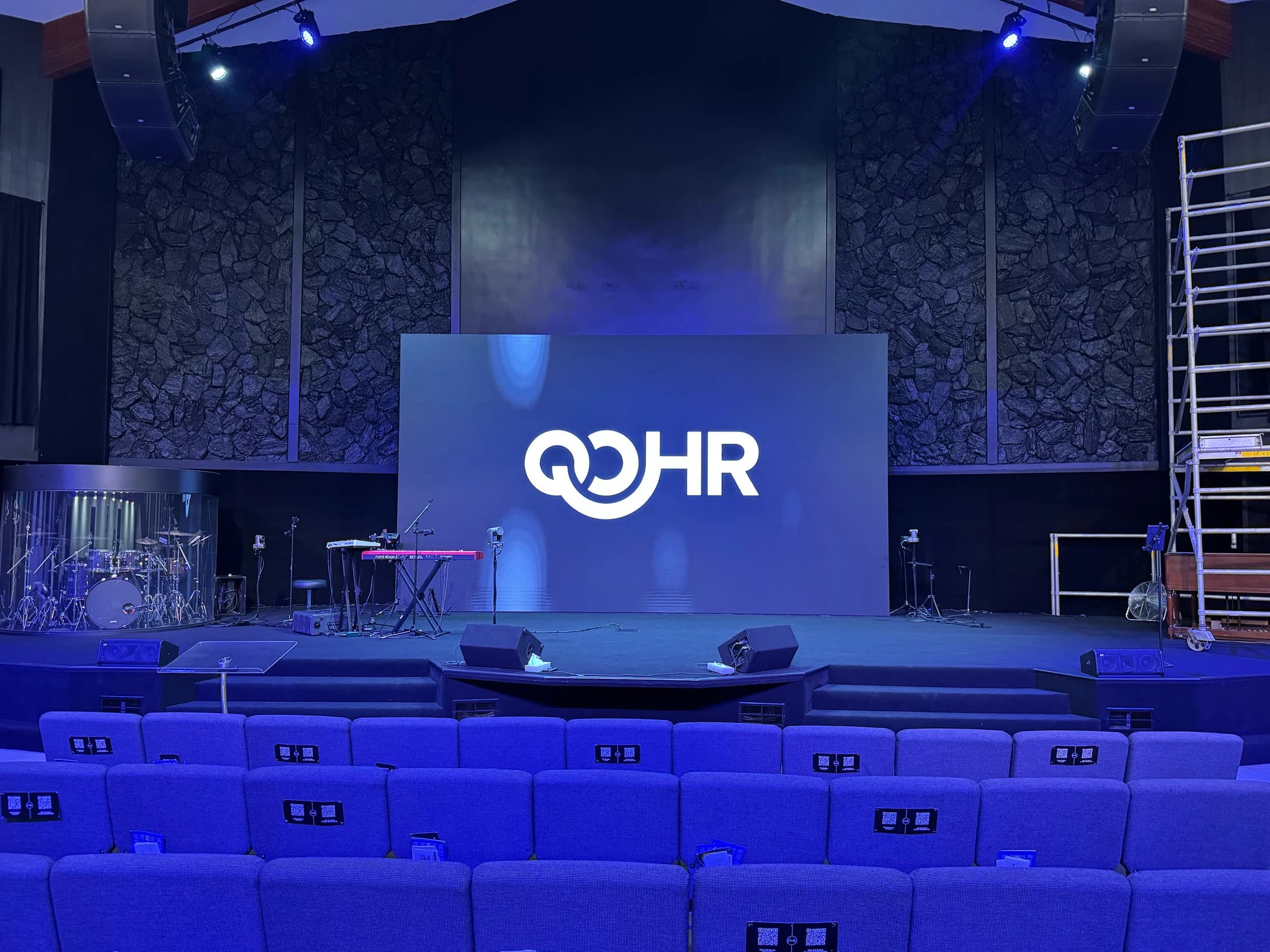
What supports the wall
Do not ignore structure, power, and service access
Some churches can use a ground-supported wall. Others need wall-mounted, flown, or custom structural solutions. The answer depends on the building, stage, safety requirements, and long-term use.
- Can the wall or stage structure safely support the system?
- Where will power come from, and is capacity sufficient?
- How will data reach the wall?
- Can modules and internal components be serviced later?
- Will the structure conflict with musicians, speakers, lighting, or cameras?
- Which building conditions have to be resolved first?
During renovations or new construction, conduit, power, backing, cable paths, and booth locations should be planned before walls and ceilings are closed.
Budget
How much does a church LED wall installation cost?
The installed cost depends on more than panel price. Major factors include wall size, pixel pitch, cabinet quality, mounting method, processing, power and data infrastructure, room access, travel, labor, camera integration, control workflow, training, spare parts, and support.
For a complete 12–23 m² sanctuary wall at 2.6mm, plan on roughly $42,000–$49,000 installed; a small or auxiliary wall of 4–12 m² runs $16,000–$31,000, a large single wall is around $68,000, and multi-wall systems with side screens run $91,000–$187,000. The church LED wall cost and price guide shows the planning ranges by wall size, the equipment package versus the complete project, and what drives the price.
A small portable wall costs far less than a large sanctuary wall integrated with broadcast cameras, switching, lighting, and permanent structure. The better question is not, “How much are the panels?” It is, “What will it cost to install a reliable system that works for our room, cameras, volunteers, and services?”
Send Qohr the room dimensions, first-row distance, stage photos, camera use, and any existing plans. Those facts are enough to begin a useful sizing conversation.
Start a projectAvoidable problems
Common mistakes churches make when buying an LED wall
Choosing panels before designing the system
Processing, power, content, cameras, control, service access, and installation need to be considered first.
Picking the wrong pixel pitch
If the pitch is too wide for the closest seats, text, faces, and detailed graphics can visibly pixelate.
Forgetting cameras and livestream
A wall can look bright in person while producing serious problems on video.
Underestimating infrastructure
Power, data, mounting, cable paths, and service access are part of the system, not optional extras.
Buying on price alone
A cheap wall becomes expensive when it requires rework, lacks support, or cannot meet the room’s needs.
Making operation too complicated
The control workflow has to fit the real volunteers responsible for the system each week.
The right display
LED wall vs. projector for churches
- The room has controlled lighting
- The display size is modest
- Camera-facing brightness is not essential
- The existing infrastructure already works
- The budget favors keeping a useful system
- The room has bright lighting
- Lyrics need stronger visibility
- The church livestreams or records
- Projection looks washed out
- The stage needs a flexible visual surface
The best choice is not always the most expensive option. It is the one that fits the church’s ministry, room, budget, and long-term plans.
Before you buy
Questions to ask before installing a church LED wall
- What problem are we trying to solve?
- How close is the first row?
- What wall size actually fits the room?
- Will the display be seen on camera?
- Do we have the right power and data infrastructure?
- How will volunteers control the system?
- How will the wall be serviced later?
- Does it integrate with livestream, lighting, or presentation software?
- Are renovation or construction decisions coming soon?
- Who will support the system after installation?
These questions prevent expensive assumptions and help make the LED wall part of a reliable production environment rather than a standalone display.
FAQ / Practical answers
Church LED wall questions
The best pixel pitch depends on viewing distance, room size, screen size, camera use, and budget. Churches with closer seating usually need a tighter pixel pitch for better image clarity.